
From the Kids Safety course to a safer walk together
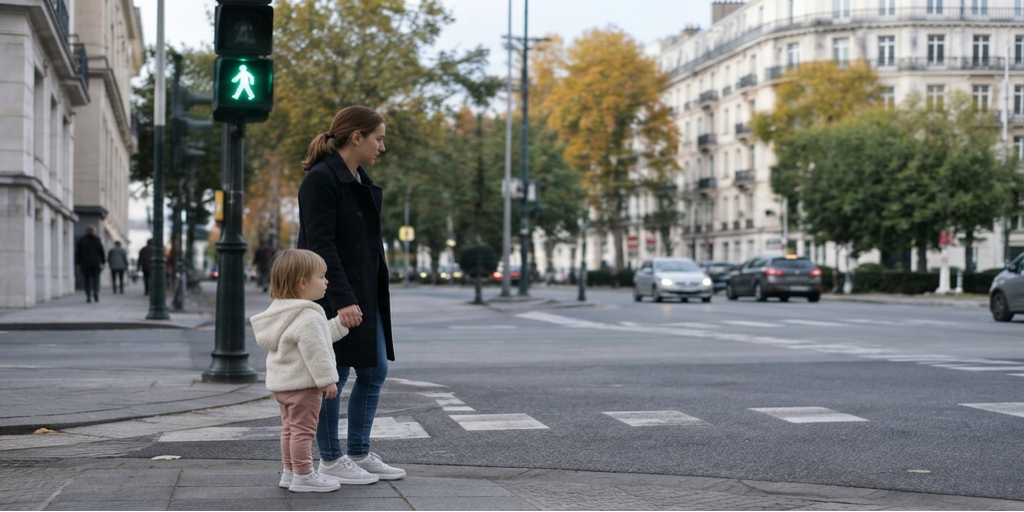
A crossing picture can start a conversation before leaving home. The Kids Safety course by Gugiboard includes street and crossing lessons that show children staying close to an adult. Use those pictures to introduce a short routine, then repeat the words during your actual walk while keeping responsibility with the grown-up.
Start at the door
Before leaving, look at the course’s safe street picture and identify the held hands. Agree on a simple phrase such as “We stay together.” At the door, hold your child’s hand before approaching traffic. Do not wait for them to remember the picture. The adult decides where to stand and when it is safe to move.
Stop and look together
The crossing lesson introduces looking left and right. On a real walk, stop well back from the edge and check every direction traffic may come from, including turning vehicles. Follow local crossing signals and rules. Explain that a green signal is not a promise that every driver has stopped; the grown-up checks the road before crossing together.
Practice away from traffic
Inside the house, pretend that a line on the floor is a stopping place. Take turns saying “stop,” looking around and holding hands. Keep the game far from roads, driveways and parking areas. The purpose is rehearsing words and attention in a safe setting, not seeing whether a child can cross independently or resist an unexpected distraction.
Connect the course and the game
Safe or Dangerous adds picture questions about everyday safety, including the street. After the Kids Safety course, ask what the adult should do in a pictured situation. Let your child point or answer, then discuss the reason. If the picture is confusing, return to the lesson instead of using the quiz result as evidence of readiness for a real crossing.
Repeat without rushing
Use the same short words on later walks, and allow extra time so neither of you feels rushed. Never send a child ahead into a crossing to demonstrate confidence. These lessons support family discussion; they do not replace holding hands, active supervision, appropriate car restraints or local road-safety advice. End the screen session when interest fades.
Source and privacy
More play ideas
- Free Kids Safety Course for Ages 2+: How GugiBoard Helps Parents Teach Safety Through Learning and Play
- Gesture Controlled Learning Games for Kids: Meet GugiHands, Where Children Learn and Play With Voice and Gestures
- From the Hebrew Alphabet to the Torah in Your Own Handwriting
- Write the Alphabet Once and Get the Whole Bible in Your Handwriting
- Kids Safety Course for Toddlers: Free Audio & Touch Lessons on What’s Safe
- Safe or Dangerous: Teaching Toddler Safety with Pictures and Audio
- Free Toddler Safety Course in English, Spanish, and Hebrew
- Your first Kids Safety course session: learn one rule together
- Safe or Dangerous: discuss the reason, not just the answer
- Water safety conversations with the Kids Safety course
- Kids Safety reports: use Little favorites as a conversation guide
- Kids Safety on gugiboard: a 12-sheet picture course for little ones
- Hot stoves and electrical outlets: teaching “don’t touch” with pictures
- Knives and scissors: a clear sharp-objects lesson for kids
- Stairs, windows and climbing: height safety for little explorers
- Water safety for toddlers: always with a grown-up
- Small pieces and choking: “not in the mouth” for little ones
- Medicines and cleaning products: only a grown-up opens them
- Road safety for kids: look left and right, hold hands
- Animal safety for kids: ask before you pet
- Safe or Dangerous: a 25-scene safety game with Little favorites
- Gugihands: learning and games controlled with gestures and voice
- Gugihands gesture guide: point, thumbs up and hands together
- Gugihands voice commands: say games, home, colors or balloons
- Gugihands games: pop balloons, Simon says, feed the mouth and drive
- Gugihands lessons: alphabet, animals, colors and numbers with Gugi
- Hands-free learning: how Gugihands works with gestures and voice
- The red finger pointer in Gugihands: point, wait and open
- Pop the balloons: five levels of gesture play in Gugihands
- Drive the car with your hands: the Gugihands steering game
- Open your mouth, Count the fingers and Simon says in Gugihands
- The Gugihands magic camera: gestures that rain emojis
- Magic Lens and animal Characters: become a lion in Gugihands
- Learning the alphabet with Gugihands: letters, pictures and gestures
- Gugihands in English, Spanish and Hebrew: one tap to switch
- Gugihands for parents: privacy, setup and healthy use
- Montessori-inspired open and close games: jars, boxes and buttons
- Practical-life play: pouring water, spoon and tongs, folding a napkin
- Montessori-inspired nature play: care for a plant and a garden
- Pink Tower, Brown Stair and cylinders: noticing size through play
- Sensorial games: color pairs, shades, sounds and geometric shapes
- Language play: object names, first sounds and a movable alphabet
- Number rods from one to ten: compare length and count segments
- Counting play: quantity, golden beads, spindle boxes and patterns
- The seasons, nature sorting, land and water: exploring the world
- Parts of the body: a calm English–Spanish picture activity
- Toddler browser games: a caregiver’s guide to shared play
- Colors and shapes for toddlers: simple ways to play together
- English and Spanish animal play: words, sounds and movement
- Play that moves on by itself: auto-advance and idle friends
- Little favorites in gugiboard: hidden percentages and fresh discoveries
- A visual tour of gugiboard: boards, Baby Games and Little favorites
- First words with jungle animals: lion, elephant, monkey and friends
- Alphabet play in two languages: from A for Apple to Ñ
- Happy, sad, surprised: naming feelings with toddlers
- Eyes, nose, hands: body parts games for toddlers
- Kindness through play: rescue stories for little helpers
- Cause and effect: why busy boards fascinate babies
- Music and sounds for babies: instruments, animals and soft songs
- Wake up to bedtime: teaching daily routines with Tiny House
- Tap, drag, draw: little fingers and fine motor play
- Healthy screen habits for toddlers: short, shared and balanced
- Play ideas by age: how gugiboard grows with your child from 0 to 7
- Counting with stars: first numbers through play
- Red, blue, yellow: learning colors step by step
- Circles, stars and hearts: finding shapes all around us
- Raising bilingual children at home: simple daily habits
- Sensory play for babies: lights, sounds and gentle movement
- gugiboard for children aged 4 to 7: from play to early learning
- “Great job!”: celebrating effort, not just results
- Calm moments: helping little ones through big feelings
- Meet the gugiboard chameleon: friendly characters that invite play
- From an animal picture to a story: reading picture books together
- Your turn, my turn: sharing play without a race
- Inside, outside, above and below: discovering spatial words
- Red, blue, red: noticing patterns without worksheets
- Where shall we go? Pretend journeys with vehicles and stories
- “What do you notice?” Questions that leave room for curiosity
- One last turn: helping children move from play to the next activity
- Different ways to join in: adapting shared play to your child
- Big sibling, little sibling: playing together without comparing scores
- A little garden story: noticing plants and practising care
- Zip & Clothes in gugiboard: familiar fasteners, clear little actions
- Little Workshop: what moves, opens and changes in gugiboard
- Inside Tiny House: everyday objects you can explore in gugiboard
- Circus & Sky and Circus Surprise: two playful worlds in gugiboard
- Light Factory in gugiboard: a light chain and a traffic-light scene
- Ball Adventure: big, small, slow and fast in gugiboard
- Domino Parade in gugiboard: one touch, a moving chain and bells
- What the colorful + opens in gugiboard: more content, familiar play
- Fruits & Food in gugiboard: pictures, words and everyday connections
- Rain, a clock and a doorbell: everyday sounds in gugiboard
- Little favorites: understand your child’s taps without turning play into a test
- Hide everything already tapped: a fresh set of choices, with one reversible action
- Small changes in Little favorites: one category at a time
- Hidden percentages in Little favorites: a clearer picture of available choices
- Why gugiboard moves to the next board after a completed activity
- The colorful plus: new discoveries inside a familiar gugiboard activity
- Saved favorites and the last play screen: continuity on the same device
- English–Spanish play with Little favorites: familiar interests, new words
- Moving friends and celebrations: the rhythm of a dynamic gugiboard session
- Little favorites and auto-advance: a practical routine for shared toddler play
- Jungle Animals: Animal learning games for toddlers in gugiboard
- Colors: Color learning activities for toddlers in gugiboard
- Shapes: Shape learning games for toddlers in gugiboard
- Numbers: Counting games for toddlers in gugiboard
- Alphabet: English Spanish alphabet activities in gugiboard
- Sounds: Animal and instrument sounds for toddlers in gugiboard
- Vehicles: Vehicle learning games for toddlers in gugiboard
- Body Parts: Body parts activities for toddlers in gugiboard
- Fruits & Food: Fruit and food vocabulary for children in gugiboard
- Emotions: Feelings activities for toddlers in gugiboard
- Little Workshop: Interactive busy board mechanisms in gugiboard
- Zip & Clothes: Zipper and clothes busy board in gugiboard
- Tiny House: Daily routine busy board for toddlers in gugiboard
- Circus Surprise: Circus cause and effect games in gugiboard
- Circus & Sky: Movement and weather activities for children in gugiboard
- Light Factory: Light chain cause and effect activity in gugiboard
- Ball Adventure: Rolling ball cause and effect game in gugiboard
- Domino Parade: Domino chain reaction game for children in gugiboard
- Colored Light Bulbs: Interactive colored lights busy board in gugiboard
- Spinning Things: Spinning toys cause and effect board in gugiboard
- Open & Opposite: Opposites learning busy board in gugiboard
- Pop the Bubbles: Bubble popping game for toddlers in gugiboard
- Feed the Animal: Animal feeding game for toddlers in gugiboard
- Match the Colors: Color matching game for toddlers in gugiboard
- Tap the Animals: Tap animal game for toddlers in gugiboard
- Put the Balls in the Basket: Drag and drop ball game for toddlers in gugiboard
- Turn On the Lights: Turn on lights toddler game in gugiboard
- Shape into Hole: Shape matching puzzle for toddlers in gugiboard
- Water the Flowers: Watering plant game for toddlers in gugiboard
- Find the Hidden Star: Hidden star discovery game for toddlers in gugiboard
- Make the Car Go: Simple car game for toddlers in gugiboard
- Fire Truck Rescue: Fire truck rescue game for children in gugiboard
- Drive the Car: First-person driving game for children in gugiboard
- Save the Drowning Dog: Kind animal rescue game for children in gugiboard
- Help the Little Bird: Bird and nest rescue game for toddlers in gugiboard
- Engaging Toddler Learning Games for 2 Year Olds at Home
- Free Busy Board Games for Toddlers Online: A Simple Way to Learn
- Engaging Bilingual Toddler Activities: Master English and Spanish Early
- The Best Educational Games for 3 Year Olds: No Download Required
- Fun Toddler Color Learning Games and Activities for Home
- Interactive Shape Recognition Games for Preschoolers and Toddlers
- Fun and Interactive Counting Games for Toddlers 1 to 5
- Interactive Alphabet Games for Toddlers with Sounds: A Parent's Guide
- The Best Animal Sounds Games for Babies and Toddlers: Fun and Discovery
- Best Virtual Vehicle Games for Toddlers Who Love Cars and Trucks
- Fun Body Parts Learning Games for Babies and Toddlers
- Using Interactive Healthy Food Games for Picky Toddlers
- Fun Emotions and Feelings Games for Preschoolers
- Engaging Fine Motor Skills Activities for Toddlers: From Touch to Screen
- Mastering the Zip: Fun Ways to Practice Dressing Skills for Kids
- Daily Routine Games for Toddlers: From Morning to Bedtime
- Under the Big Top: Fun Circus Themed Games and Activities for Kids
- The Joy of Discovery: Cause and Effect Games for Babies and Toddlers
- The Joy of Domino Chain Reactions: Cause and Effect Play for Toddlers
- Exploring Light and Color: Sensory Play for Toddlers
- Why Babies Love Spinning Toys: A Guide to Visual Tracking
- Fun Open and Close Activities for Toddler Hands: From Playroom to Screen
- Teaching First Words in Spanish and English to Your Toddler
- Screen Time Tips for Toddlers: The Power of Shared Play
- How to Choose Safe Toddler Apps Without Ads: A Parent’s Guide
- Toddler Games That Work Offline: Stress-Free Travel Tips
- The Best Car Ride and Travel Games for Toddlers and Babies
- Screen-Friendly Quiet Time Activities for Toddlers Before Nap
- Engaging Rainy Day Indoor Activities for Toddlers and Preschoolers
- Screen-Safe Toddler Birthday Party Busy Board Ideas
- The Grandparent's Guide to Meaningful Online Play with Toddlers
- Shared Screen Success: Sibling Play Ideas for One Device
- Potty Training Patience: Games to Build Waiting Skills
- Maximizing Toddler Learning with Short, Engaging Play Sessions
- The Joy of Music and Sound Exploration for Babies and Toddlers
- Lullabies and Calm Music for a Better Baby Sleep Routine
- Bilingual Parenting: Practical Tips for Raising Kids with Two Languages
- Spanish Learning Games for English Speaking Kids: A Playful Start
- Fun English Learning Games for Spanish Speaking Kids
- Toddler Speech Practice: Naming Objects Together for Language Fun
- Pretend Play Rescue Games: The Magic of Fire Trucks for Kids
- Nurturing Empathy: Pet Care Pretend Play and Feeding Animals for Toddlers
- Water Play and Plant Growing: Sensory Fun for Toddlers and Preschoolers
- The Role of Hide and Seek Games in Building Toddler Attention
- Using Interactive Matching Games for Toddler Memory Practice
- Ball Games and Hand-Eye Coordination: Fun Ways to Play with Toddlers
- Stargazing and Counting Stars: A Magical Nightly Routine for Toddlers
- Bubble Play: Sensory Fun and Learning for Babies and Toddlers
- Nurturing Toddler Independence: Learning to Get Dressed Solo
- Building Preschool Readiness Skills Through Interactive Digital Play