
One last turn: helping children move from play to the next activity
Stopping something enjoyable can feel abrupt, especially when the next activity is less appealing. A child may be ready to finish one day and find it difficult the next. A gentle transition is not a trick that guarantees cooperation. It is a way to make the change understandable, stay connected and offer support while an adult holds the boundary.
Know what comes next before starting
Choose a moment when you can stay beside your child and decide how play will end. “We’ll play together, then have our snack” connects the activity to something concrete. Do not begin a session you must suddenly interrupt if that can be avoided. For babies, build the moment around your voice and physical play rather than a screen.
Use a small, honest preview
A simple phrase such as “One more animal, then we put it away” can be clearer than a distant time promise. Only offer one more turn if you can allow it. Avoid repeating “last one” many times, which can make the boundary confusing. A younger child may still need help even after hearing exactly what will happen.
Do not let a game decide the ending
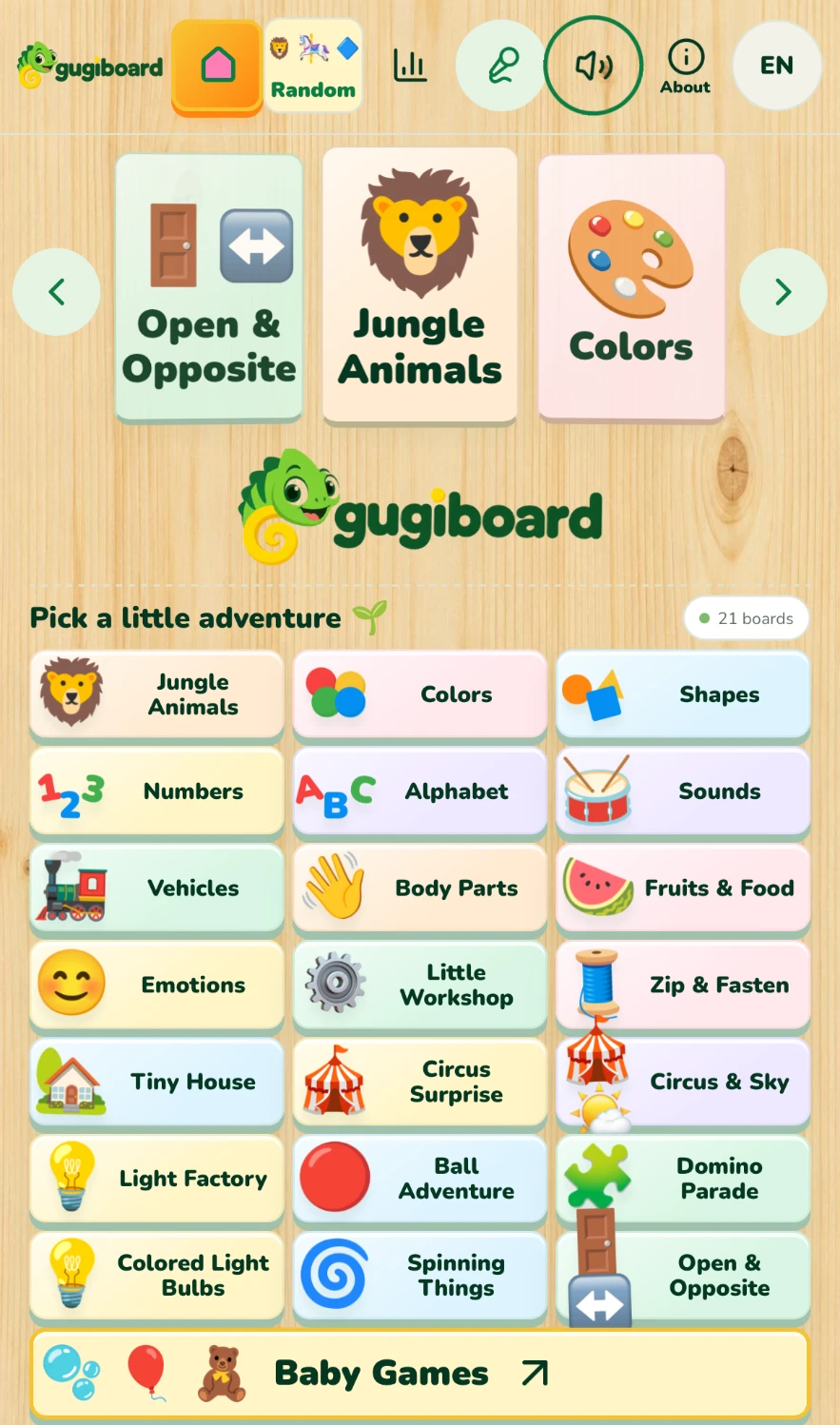
gugiboard can automatically move to another board after the current one is completed. That does not mean a family must keep playing until the next round ends. Home remains available, and you can leave whenever the shared moment is over. Confetti and praise are playful feedback, not a requirement to earn permission to stop or move on.
Offer a choice within the transition
Try “Shall we carry the book or the soft toy to the sofa?” rather than asking whether a necessary change will happen. Keep choices few and realistic. If the child is upset, name the feeling without arguing: “You wanted to keep playing.” Hold the limit gently and allow time for comfort instead of demanding cheerful agreement.
Carry one idea into the next activity
A bird from the game can become a bird you look for in a book; a color can become the color of the cup at snack time. This gives continuity without leaving the screen running. Do not use food as a prize for finishing a game. The next activity can simply be another part of the day, with its own reasons to enjoy it.
Adjust the plan when needed
If endings repeatedly feel overwhelming, consider shorter sessions, a different time of day or skipping digital play altogether. Tiredness, hunger and sensory discomfort can change how a transition feels. These suggestions do not diagnose the cause. Seek professional advice when difficulties are persistent or concerning, and keep movement, rest and face-to-face connection central to the day.
Source and privacy
More play ideas
- Toddler browser games: a caregiver’s guide to shared play
- Colors and shapes for toddlers: simple ways to play together
- English and Spanish animal play: words, sounds and movement
- Play that moves on by itself: auto-advance and idle friends
- See what your toddler taps most—and hide it with one tap
- A visual tour of gugiboard: boards, Baby Games and Little favorites
- First words with jungle animals: lion, elephant, monkey and friends
- Alphabet play in two languages: from A for Apple to Ñ
- Happy, sad, surprised: naming feelings with toddlers
- Eyes, nose, hands: body parts games for toddlers
- Kindness through play: rescue stories for little helpers
- Cause and effect: why busy boards fascinate babies
- Music and sounds for babies: instruments, animals and soft songs
- Wake up to bedtime: teaching daily routines with Tiny House
- Tap, drag, draw: little fingers and fine motor play
- Healthy screen habits for toddlers: short, shared and balanced
- Play ideas by age: how gugiboard grows with your child from 0 to 7
- Counting with stars: first numbers through play
- Red, blue, yellow: learning colors step by step
- Circles, stars and hearts: finding shapes all around us
- Raising bilingual children at home: simple daily habits
- Sensory play for babies: lights, sounds and gentle movement
- gugiboard for children aged 4 to 7: from play to early learning
- “Great job!”: celebrating effort, not just results
- Calm moments: helping little ones through big feelings
- Meet the gugiboard chameleon: friendly characters that invite play
- From an animal picture to a story: reading picture books together
- Your turn, my turn: sharing play without a race
- Inside, outside, above and below: discovering spatial words
- Red, blue, red: noticing patterns without worksheets
- Where shall we go? Pretend journeys with vehicles and stories
- “What do you notice?” Questions that leave room for curiosity
- Different ways to join in: adapting shared play to your child
- Big sibling, little sibling: playing together without comparing scores
- A little garden story: noticing plants and practising care